Employee recognition guide: Don’t lose your rockstar employees
How do you retain great talent when the deck is stacked against you?
Recognize today’s rockstars to build tomorrow’s workforce
Good people are hard to find, but they’re even harder to keep. Amid a global talent shortage, retaining, engaging and inspiring employees has become mission-critical.
So how do you retain top talent in an increasingly remote and diverse work landscape? Download our free guide, “Don’t lose your rockstar employees”, to find out.

What’s in the guide
Recognition tips
Explore data-driven insights on employee recognition, including how to tailor strategies to unique personalities.
Retain top talent
Cultivate critical skills, foster collaboration, and empower your employees to thrive in a changing world.
Manage remote employees
Learn how to balance workloads, well-being and motivation to get the benefits of flexible work – now and in the future.
Introduction
Beyond the great resignation
Recognizing the power of recognition
Decoding diverse personalities and work styles
Recognition in the remote work era
Building a future-ready workforce
Let’s put these insights into action
Introduction
Half your employees are looking for a new job. Employee recognition can change that.
Talent shortages should be every leader’s top priority in 2025

1 in 2
One in two employees (51%) is looking for a new job

42%
Nearly the same number of CEOs (42%) see labor shortages as an acute challenge this year
Half your employees are looking for a new job. Employee recognition can change that.
Some people thrive in the spotlight, while others prefer private praise. This guide outlines 10 personality types, including their motivations and working styles. You’ll gain a new perspective and get tips for tailoring recognition strategies to your team’s unique personalities
Beyond the Great Resignation
Understanding today’s workforce challenges
In 2021, a record number of people left their jobs. In 2022, the records fell again. By the end of 2023, so many people had joined the ranks of the Great Resignation that labor shortages became the rule rather than the exception.
On average, 75% of employers worldwide report difficulty filling open roles, according to Manpower Group. No one industry, region, or skill set is disproportionately affected. Developing and developed economies alike are experiencing shortages. Technical and non-technical roles remain unfilled. The scale of the global shortage is starting to clarify:

42%
of COOs see frontline labor shortages as a significant challenge in 2024 (PwC)

35%
of CEOs expect labor shortages to disrupt their business strategy (Deloitte)

$8.5T
of potential revenue could go unrealized by 2030 due to talent shortages (Korn Ferry)
Without the ability to hire, retain and promote good people, businesses will fail.
45%
of CEOs think their organizations will no longer be viable in 10 years without reinvention (PwC)
60%
of organizations face challenges with transformation due to skills gaps in the local labor market (World Economic Forum)
48%
are pessimistic about the global economy, an 11% rise in 4 months (Deloitte)
69%
are optimistic about their company’s performance (down from 73%), and 40% are optimistic about their industry (down from 47%) (Deloitte)
On the employee side: Advancement
In a 2022 survey of 12,000 employees, McKinsey found that ‘better career opportunities’ outranked ‘flexible working arrangement’ as motivation for finding a new job. This isn’t surprising, given the confluence of factors that might make employees eager to take the next step:
Emerging technologies threatening job security
Emerging technologies threatening job security
Emerging technologies threatening job security
Recognizing the power of recognition
Recognition is a powerful motivator. It helps to boost employee engagement, bring forward innovative ideas, encourage collaboration and improve retention. When employees know their efforts matter, they’re more willing to put in that effort.
Increased morale
Emerging technologies threatening job security
Enhanced engagement
Employees who feel valued are more likely to go the extra mile. Great Place to Work found that 37% of employees singled out recognition as the most important driver of great work.
Improved performance
Recognition reinforces positive behaviors and encourages employees to maintain high performance standards. As a result, employees become more invested in achieving goals and exceeding expectations.
Reduced turnover
Feeling valued and appreciated reduces the likelihood of employees seeking opportunities elsewhere. Recognition fosters loyalty and a sense of belonging, encouraging them to stay with the company.
Better collaboration
Consistent, transparent and equitable recognition is a powerful motivator for teamwork. According to Great Place to Work, employees who feel recognized are 2.6x more likely to think promotions are fair.
Achievements
Meeting targets
Completing a project
Receiving an award or certification
Launching a new product or service
Solving an organizational problem
Resolving a customer complaint
Leading a successful project
Desired behaviors
Demonstrating teamwork and collaboration
Adapting to changes or challenges
Taking initiatives with technology
Maintaining work-life balance and productivity
Always meeting deadlines
Supporting colleagues to achieve shared goals
Embodying organizational values
Gallup and Workhuman studied thousands of employees across several countries to gauge the power of recognition.
73%
less burned out%
56%
less likely to seek job opportunities
44%
more likely to be thriving in life
5x
more connected to their culture
4x
more engaged
5x
more likely to see a growth path at their organization
4x
more likely to recommend their organization
And yet, 81% of leaders say recognition is not a strategic priority. We need to change that.
The Analyst
Strengths
- Organized
- Detail-oriented
- Accurate
- Reliable
Challenges
- Can be inflexible
- Resistant to change
- Struggles with ambiguity
Motivations
- Accuracy
- Efficiency
- Problem-solving
Recognition
Publicly acknowledge their attention to detail and highlight instances where their meticulous work saved the day. Offer them opportunities to solve complex problems or mentor others.
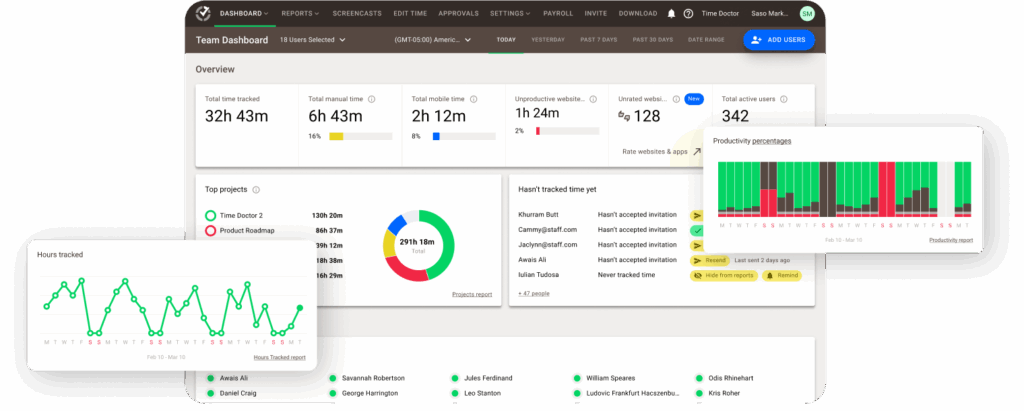
Take a peek at the future of work
Request a 1-on-1 demo with a Time Doctor specialist to see how workforce analytics can help you build a resilient, future-ready workforce.